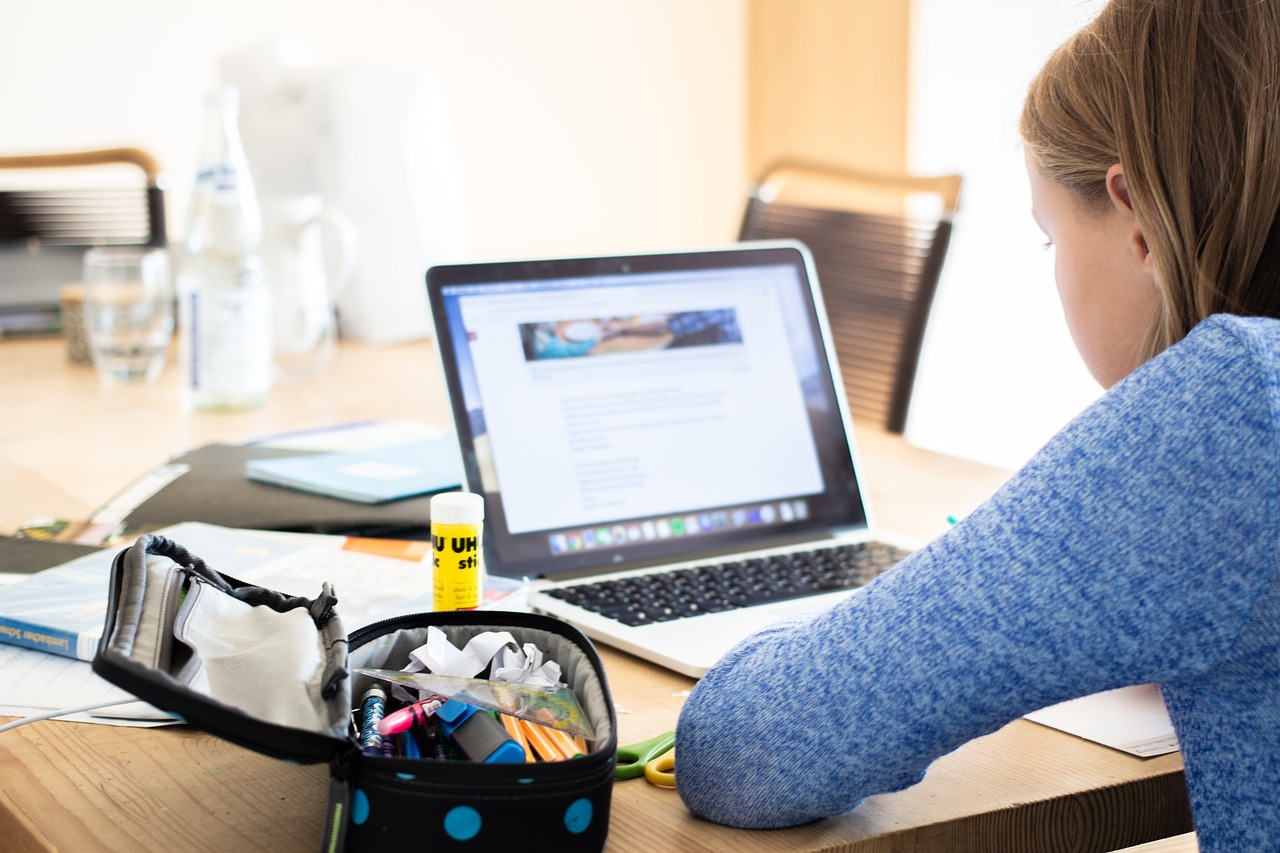
What to Look for When Choosing a Prep School

prep

How to Support Your Child with Prep School

On a Tuesday morning last term, a parent stood at the school gate watching her seven-year-old walk in clutching a project she’d stayed up finishing. She wondered, as many parents do, whether she was doing enough at home. That quiet uncertainty is more common than most people admit, and it says something reassuring: caring parents worry precisely because the years matter.

Prep school is a formative stretch, usually running from around age seven to thirteen. Children build the habits, friendships and academic foundations that carry them into senior school. Supporting a child through it isn’t about becoming a second teacher. It’s about creating the conditions at home where a child can settle, stretch and enjoy the process.

Read more: What to Look for When Choosing a Prep School

Start with the ordinary things

Sleep, food and routine do more heavy lifting than any revision plan. A child who is well rested and knows what the morning looks like arrives at school ready to learn. Predictable evenings, a sensible bedtime and a calm start to the day are unglamorous, but they underpin everything else.

Talk about school without turning every conversation into an interrogation. “What made you laugh today?” often opens a child up far more than “What did you learn?” The goal is to keep them talking, so that when something does go wrong, they already trust you with the small stuff.

Let curiosity lead

The prep years are when children discover what genuinely interests them, whether that’s fossils, football, coding or the cello. Follow those threads. A trip to a museum, a library card, a shared documentary or simply time to potter and build all feed a growing mind.

This is worth keeping in view when families are choosing where their child learns too. Many parents find that a nurturing prep school in Surrey can offer the breadth and encouragement that helps interests flourish, from the arts to the outdoors. A setting that values the whole child, not just exam results, tends to nurture the kind of curiosity that lasts.

Support learning without taking over

There’s a fine line between helping and hovering. When homework causes friction, resist the urge to solve it for them. Ask questions instead: “Where do you think you got stuck?” or “What could you try next?” Children learn far more from working through a difficulty than from being handed the answer, and they build resilience along the way.

Praise effort and strategy rather than only results. A child who hears “you kept going even when it was hard” learns that persistence is what counts. That mindset serves them well long after the specific spelling test is forgotten.

prep

Work with the school, not around it

Teachers see a side of your child you don’t, and you see a side they don’t. Share what you notice at home, whether it’s a wobble in confidence or a new enthusiasm. Attend the parents’ evenings, read the newsletters, and treat the relationship as a genuine partnership. Schools such as Barrow Hills are used to working closely with families, and that shared picture helps a child feel consistently supported on both sides of the gate.

Keep perspective when things dip

Every child has weeks that don’t go to plan: a friendship that sours, a subject that suddenly feels impossible, a bad mark that stings. These moments feel large at the time and small in hindsight. Meet them with steadiness rather than alarm. Children take their emotional cues from the adults around them, so a calm response teaches them that setbacks are survivable and often useful.

The parent at the gate that Tuesday morning was, in truth, already doing the most important thing. She was paying attention. Prep school support rarely comes down to grand gestures. It’s the steady, everyday presence that tells a child they are backed, whatever the day brings.

You can find out more about the school’s approach to the prep years at https://barrowhills.org.

How to Help Your Child Feel Ready for Exams

exam

A Parent’s Guide to Exams: 6 Practical Ways to Help Your Child

Exam season rarely arrives quietly. One week the calendar looks manageable, the next it is crowded with revision timetables, past papers and a teenager who insists everything is fine while clearly feeling anything but. Parents often want to help, yet worry about hovering too closely or saying the wrong thing.

The good news is that support does not require you to remember quadratic equations or French irregular verbs. It comes down to a handful of steady, sensible habits. Here are six of them.

1. Get the environment right before the studying starts

A tidy, well-lit space with a chair, a surface and no television does more for concentration than any motivational speech. Keep phones in another room during revision blocks, agreed in advance rather than confiscated in the heat of the moment.

Takeaway: Sort the setting first, and the focus follows more easily.

2. Help build a timetable, then step back

Children revise better when the plan is theirs. Sit down together, map the subjects against the exam dates, and break large topics into short, specific sessions. Then let them own it. A plan imposed from above tends to be abandoned by Wednesday.

Takeaway: Guide the structure, but hand over the ownership.

3. Feed the brain, not the panic

Regular meals, water and sleep sound obvious, yet they are the first things to slip. Late-night cramming fuelled by energy drinks feels productive and rarely is. A consistent bedtime during exam weeks protects memory and mood far more than an extra hour of frantic reading.

Takeaway: Rest and routine are revision tools, not luxuries.

exam

4. Talk about the feeling, not just the facts

Nerves are normal and worth naming. Ask how your child is finding it rather than what mark they expect. Many schools now teach pupils to manage pressure as part of their wider pastoral care, and settings such as an independent school with a strong reputation for academic support show how emotional wellbeing and results can go hand in hand.

Takeaway: A calm child performs better than an anxious one.

5. Encourage active revision over passive reading

Reading notes over and over feels reassuring but sticks poorly. Testing recall works far better: flashcards, quick quizzes, explaining a topic aloud, or attempting past questions under timed conditions. If your child can teach you the material, they genuinely know it.

Takeaway: Recall beats rereading every time.

6. Keep perspective, especially on the day

Exams matter, but they are one measure among many. Remind your child that a single paper does not define their ability or their future. On the morning itself, a decent breakfast and a calm send-off do more good than any last-minute quizzing at the front door.

Takeaway: Confidence travels better than crammed facts.

A final word for parents

Supporting a child through exams is less about knowing the syllabus and more about being a steady presence. You provide the calm, the routine and the reassurance; they provide the effort. The combination is a powerful one.

Schools with a clear focus on both academic achievement and pastoral support tend to prepare pupils well for these moments, and there is plenty parents can learn from their approach. St Catherine’s School, Bramley, is one example of a setting where this balance is taken seriously. You can find out more at https://www.stcatherines.info/.

How to Choose the Right A Levels for Your Future

level

Why A Levels Matter in a Child’s Development

Picture two students, both bright, both hard-working, arriving at the same crossroads at sixteen. One heads towards A Levels; the other towards a vocational or diploma-based route. Neither choice is wrong. But the paths shape young people in genuinely different ways, and understanding those differences helps families choose well rather than by default.

Depth versus breadth

A Levels ask students to specialise. Choosing three or four subjects means going deep, following a topic past the point where a general education would stop. That depth builds a particular kind of confidence: the sense that you can master something difficult if you stay with it long enough.

Read more: How to Choose the Right A Levels for Your Future

Compare that with broader, modular qualifications, which spread attention across more areas and often blend practical assessment with coursework. These reward flexibility and steady application over sustained months. Neither approach is superior in the abstract. The question is which pattern suits the young person in front of you.

A teenager who loves losing themselves in one subject often thrives under the focus A Levels demand. One who prefers variety, or who learns best by doing rather than reasoning on paper, may flourish elsewhere.

How the two routes build different habits of mind

The daily experience of studying differs more than the syllabus suggests.

A Levels lean heavily on independent thought. Students are expected to construct arguments, weigh evidence and defend a position, particularly in essay subjects. That habit of questioning carries into adulthood, shaping how a person reads the news, forms opinions and handles disagreement.

Vocational routes, by contrast, tend to build competence through repetition and real-world context. A student learns a skill, applies it, refines it. This develops resilience and a practical, problem-solving instinct that classroom-only routes rarely match.

Put simply, one path often sharpens the reasoning mind; the other sharpens the doing mind. Most young people carry a little of both, which is why the fit matters more than the label.

level

What this means for university and beyond

A Levels remain the most widely recognised entry route to competitive university courses, and for good reason. The linear, exam-based structure prepares students for the intensity of degree-level study, where large amounts of information must be understood, organised and recalled under pressure.

That said, plenty of degrees and apprenticeships welcome diploma students, and employers increasingly value the applied experience those qualifications carry. The right choice depends on where a young person wants to end up, not on any assumed hierarchy between the two.

Specialist sixth-form colleges have long understood that this decision deserves proper attention. Families weighing their options often benefit from talking to a sixth-form college with real expertise in A Level teaching, where the emphasis falls on matching a student’s ambitions to the route most likely to realise them.

Reading your own child honestly

The most useful thing a parent can do is watch how their child actually learns, rather than how they wish they learned.

Does the young person light up when a problem gets harder, or when they can finally see a finished, tangible result? Do they enjoy debating an idea, or would they rather build, test and improve something? These small clues say more than any prospectus.

A Levels reward curiosity, stamina and abstract thinking. Other routes reward adaptability, initiative and hands-on skill. Growth happens on both, but it happens most reliably when the route fits the person.

Whichever path a family chooses, the goal is the same: a young person who leaves education more capable, more confident and clearer about who they are. Choosing thoughtfully at sixteen is one of the quiet ways parents help make that happen.

You can explore MPW’s approach in more detail at https://mpw.ac.uk.

Why Routine Makes Such a Difference for Children at School

routine

What Are the Benefits of Routine in Independent Schools

Ask most parents what worries them about the school day and you will hear a familiar theme: the mornings feel chaotic, evenings dissolve into arguments over homework, and by Sunday night nobody quite knows what the week ahead holds. The problem is rarely a lack of effort. More often, it is a lack of rhythm. Children thrive on knowing what comes next, and when that structure is missing, small stresses pile up quickly.

The good news is that structure can be built, and it is one of the quiet strengths of a well-run school. Here is how a settled routine tackles the friction so many families feel.

Read more: Why Routine Makes Such a Difference for Children at School

The problem: uncertainty is tiring

Uncertainty asks a lot of a young mind. When a child does not know whether the next hour holds a test, a free period or a change of room, part of their attention stays occupied with simply working out what is happening. That background effort is exhausting, and it leaves less energy for the learning itself.

Adults feel this too. A day with no clear shape tends to drift, and the important tasks slide to the bottom of the pile. For children, who are still developing the skills to plan and prioritise, the effect is sharper.

How structure eases the load

A predictable timetable removes a whole layer of guesswork. When lessons, breaks and meals fall at the same time each day, children can settle into the work in front of them rather than bracing for the unknown. The routine does the remembering, so they do not have to.

This is where a strong school environment makes a real difference. Families looking at schools that build purposeful daily structure into everyday learning often notice how calm the atmosphere feels, precisely because the day has a dependable shape. Consistency is not about rigidity. It is about freeing up mental space for curiosity, friendship and creativity.

routine

Routine and wellbeing

There is a clear link between predictability and how safe a child feels. Regular sleep, mealtimes and study slots support steadier moods and better concentration. A child who knows that reading happens after supper, or that Friday afternoon brings sport, has fewer moments of anxious anticipation across the week.

Wellbeing benefits stretch beyond the individual. When a class shares the same rhythm, transitions between activities become smoother and there is less time lost to confusion. Everyone knows the drill, so the group moves together.

Building independence, not dependence

A fair worry is that too much structure might leave children unable to think for themselves. In practice, the opposite tends to happen. A reliable framework gives young people a safe base from which to take small risks and make their own choices.

Consider homework. A child with a set study time each evening does not have to negotiate when to start; the decision is already made. That frees them to focus on how to approach the task, which subject to tackle first and when to ask for help. Over time, these habits become their own. The routine acts as scaffolding, and as confidence grows, the child begins to manage more of it independently.

Bringing it home

The benefits multiply when school and home pull in the same direction. Parents can support the pattern with a few simple anchors: a consistent bedtime, a tidy spot for the school bag, and a regular moment to look at the week ahead together. These small rituals reinforce the sense that the day is manageable.

None of this needs to be complicated. The aim is not a rigid timetable policed to the minute, but a gentle, dependable shape that a child can lean on. When that shape is in place, both learning and family life feel a good deal less frantic. You can read more about this approach at https://rgs-surreyhills.org.

How to Make Homework a Calm Part of Your Child’s Evening

homework

How to Support Your Child with Calm Homework

Homework has a reputation for causing evening standoffs. Yet a lot of what parents believe about the after-school slog turns out to be more myth than fact. Untangling the two can transform a fraught half hour into something far more settled, for the child and for everyone else in the house.

Myth: More hours mean better results

The idea that longer sessions produce stronger work is stubborn, but the evidence points the other way. A tired child rereading the same paragraph is not learning; they are simply enduring. Short, focused stretches with clear breaks tend to serve younger children far better than a marathon at the kitchen table.

Try setting a realistic window and sticking to it. When the time is up, it is up. Children work harder when they can see the finish line, and they arrive at the next task with something left in the tank.

Myth: A calm child is a quiet, still child

Calm is often confused with silence. In practice, some children settle best with a little movement, a snack beforehand, or the low hum of a familiar space rather than enforced hush. What matters is regulation, not stillness.

Watch for the signs your own child gives. One may need a few minutes of fresh air before sitting down; another may focus better after reading aloud a single line to shake off the wriggles. Calm homework is less about a perfect scene and more about a child who feels steady enough to begin.

Myth: Parents should be the second teacher

Plenty of parents assume their job is to explain, correct and quietly re-mark. This tends to raise the temperature rather than lower it. Children read frustration quickly, and a parent hovering over every sum can turn a manageable task into a test of the relationship.

A gentler role works better: set up the space, sit nearby, and let your child attempt the work first. Questions like “where do you think you’d start?” hand the thinking back to them. Good schools reinforce this at home, and schools that build strong habits around independent learning often send guidance home precisely so parents can step back with confidence.

homework

Myth: Struggle means something is wrong

A furrowed brow is not a red flag. A certain amount of effort, even mild difficulty, is where the learning actually happens. If a child never finds anything hard, the work is probably pitched too low.

The trick is telling productive struggle apart from genuine distress. The first looks like concentration and the occasional sigh. The second looks like tears, avoidance or a child insisting they simply cannot. Only the second needs your intervention, and usually the answer is a break, not a rescue.

What calm homework actually looks like

Strip away the myths and a workable routine emerges. A consistent time and tidy spot. A short, clear window rather than an open-ended sentence. A parent who is present but not performing the task. And a shared understanding that some difficulty is normal and welcome.

None of this requires charts, rewards or elaborate systems. It rests on the same principle used across settings like Buckingham Preparatory School, where structure and independence are treated as partners rather than opposites. Children who learn to manage short bursts of focused work early tend to carry that steadiness into their later years.

Above all, keep the evening in proportion. Homework is one part of a child’s day, not the measure of it. A calm approach protects both the learning and the household, which matters far more than any single worksheet.

You can read more about that balance at https://buckprep.org.

How to genuinely motivate children to learn at home and school

children

Five Ways to Encourage Motivate To Learn at Home

Every parent knows the moment. A worksheet sits untouched on the kitchen table, a reading book lies face down on the sofa, and the child in question would rather do almost anything else. Motivation at home rarely arrives on demand, and it certainly cannot be forced. What it can be is nurtured, quietly and consistently, until learning starts to feel less like a task and more like something a child chooses for themselves.

The good news is that the ingredients are simpler than they seem. You do not need a house full of educational gadgets or a rigid after-school timetable. You need a few habits that make curiosity easy and effort feel worthwhile.

Read more: How to genuinely motivate children to learn at home and school

The first is to follow the child’s own interests rather than fighting against them. A child obsessed with dinosaurs can practise reading, counting and writing through that single passion, and will barely notice the work involved. When learning connects to something a child already cares about, motivation looks after itself.

The second is to praise effort rather than results. A child who is told they are clever learns to fear the moment they get something wrong. A child who is told they tried hard learns that mistakes are simply part of getting better. This small shift in language does a great deal to keep a child willing to have a go, and willingness is where all real learning begins.

Making the home feel like a place to think

Environment matters more than most families expect. A calm corner with a decent light, a few books within reach and a clear surface to work on sends a quiet signal that learning belongs here. It need not be elaborate. A shelf, a tidy drawer of pencils and a chair that is comfortable for twenty minutes are usually enough.

Alongside the space comes routine. Children thrive on knowing what happens next, and a gentle rhythm around reading or homework removes the daily negotiation that wears everyone down. The aim is not a strict schedule but a familiar one, so that settling down to think becomes ordinary rather than a battle.

children

This blend of interest, encouragement, space and routine is something the best schools understand well, and families often find it helpful to see how a strong educational setting approaches it. Parents looking for [an independent school that fosters a genuine love of learning|https://towercollege.com] can find plenty of ideas worth borrowing for home, from the way reading is celebrated to the small daily habits that keep children engaged.

The fifth, and most powerful, way

The final approach is the one adults most often overlook: letting children see you learn. When a parent picks up a book, tackles a new recipe, or admits they had to look something up, they teach a lesson no worksheet can. Curiosity is contagious. A child raised in a home where questions are welcome and answers are worth chasing grows up believing that learning is a normal, lifelong part of being a person.

None of this happens overnight. Motivation ebbs and flows, and some weeks will feel like hard going. What matters is the direction of travel. A child who feels supported, whose efforts are noticed, and who sees the adults around them genuinely enjoying the act of finding things out will carry that attitude far beyond the kitchen table.

Tower College has long believed that motivation grows best when children feel secure, valued and gently challenged. Bring those same qualities into the home, and the untouched worksheet has a much better chance of getting finished.

More guidance for families can be found at https://towercollege.com.

How Children Learn the Art of Making Friends

children

How to Support Your Child with Making Friends

Picture the school gate on a Monday morning. One child bounds off to join a cluster of friends mid-conversation. Another hangs back, satchel gripped a little too tightly, scanning the playground for a familiar face. Most parents recognise both of these children, sometimes in the same week. Friendship rarely arrives on a neat schedule, and watching a child navigate it can be quietly nerve-wracking.

The good news is that making friends is a skill, not a fixed trait. Children learn it much as they learn to read or ride a bike: with practice, patience and a bit of gentle support from the adults around them.

Read more: How Children Learn the Art of Making Friends

What friendship actually asks of a child

We tend to talk about friendship as if it simply happens. In reality it draws on a surprising range of small abilities. A child needs to read a facial expression, take turns, cope with the odd rejection, and judge when to join in and when to hold back. These are big asks, especially for younger children whose emotions can run ahead of their words.

Understanding this changes how we respond. A child who struggles to join a game is not necessarily shy or difficult. More often they are still working out the unwritten rules, and a little coaching goes a long way.

Practical ways to help at home

Support does not mean managing every friendship for your child. It means giving them the tools to manage their own.

– Name the feelings. When a child comes home upset that a friend played with someone else, resist the urge to fix it instantly. Try “That sounded disappointing” first. Feeling understood helps children reflect rather than react.

– Rehearse the tricky bits. Practise simple openers at home: “Can I play too?” or “What are you making?” Role play feels silly, but it builds confidence for the real moment.

– Create low-pressure chances to connect. A shared activity, a walk to the shop, a board game, takes the spotlight off conversation and lets friendship grow sideways.

– Model it yourself. Children watch how the adults around them greet neighbours, resolve small disagreements and make time for people. Your friendships are a live lesson.

children

When the setting does some of the work

Home matters enormously, but children spend much of their week elsewhere, and the environment they land in shapes how easily they form bonds. A school that weaves collaboration, kindness and shared purpose into daily life gives friendships plenty of soil to take root in. Group projects, house systems, drama, sport and pastoral care all quietly teach children how to belong.

Parents looking at schools that place genuine value on pastoral care and a sense of community often find their child settles socially far more quickly, simply because friendship is treated as something worth nurturing rather than an afterthought.

Give it time, and keep perspective

Friendships shift, and that is normal. The best friend of Year 3 may drift by Year 5, and the child who seemed lonely in September may have a firm group by spring. Try not to read a single hard week as a lasting verdict. Children are resilient, and most social wobbles smooth out with time and a steady adult nearby.

What they need most is the sense that home is a safe place to talk, to practise and, occasionally, to feel sad without being rushed towards a solution. That reassurance is often the quiet foundation everything else is built on.

Friendship will always involve a few false starts and awkward moments. That is part of learning it. With a supportive home, a caring school and a little patience, most children find their people in the end.

Growth Skills Every Child Needs Before Secondary School

skills

Five Ways to Encourage Growth Skills at Home

Ask most parents what helps a child develop, and they will point to good marks, a full timetable and a tidy report card. Those things matter. But they are not the whole picture, and some of what we assume about growth simply does not hold up. Growth skills, the everyday habits of resilience, curiosity, independence and self-belief, are built in quieter moments than we tend to expect. Here are five common myths, and what actually helps.

Read more: Growth Skills Every Child Needs Before Secondary School

Myth: growth means keeping children busy

The reality is closer to the opposite. A packed schedule leaves little room for the boredom that sparks imagination or the reflection that turns experience into learning. Children who have unstructured time learn to make their own choices, solve small problems and follow their own interests. You do not need to fill every afternoon. Leave a gap, and see what your child does with it.

Myth: praise builds confidence

Praise feels kind, and it has its place. But praising the outcome (“well done, top marks”) can make children anxious about the next result. What genuinely builds confidence is recognising effort and strategy: “you kept going when that got hard,” or “I noticed you tried a different way.” This shifts attention from the score to the process, and the process is where growth actually happens.

Myth: failure should be avoided

Many of us instinctively smooth the path so our children never stumble. Yet setbacks are how growth skills are practised. A child who is allowed to forget their kit, lose a game or get a maths problem wrong learns something no lecture can teach: that difficulty is survivable and often useful. The role of a parent is not to remove obstacles but to be steady company when they appear.

Myth: independence has to wait

There is a tempting belief that responsibility comes later, once children are “ready”. In truth, small responsibilities given early do the work. Let a young child pack their own bag, plan part of a weekend or manage a little pocket money. They will make mistakes, and that is the point. Independence is a skill built through repetition, not a switch that flips at a certain age.

skills

Myth: schools do the developing, parents do the rest

The best results come when home and school pull in the same direction. Well-regarded schools understand that character and academic ability grow together, which is why parents often look to settings such as [a school that nurtures both academic ambition and personal growth|https://newhallschool.co.uk] when choosing where their children will thrive. What happens at the kitchen table and what happens in the classroom are part of one conversation, not two.

Bringing it together at home

None of this requires a grand plan. Give your child a little more space and a little less rescuing. Notice effort out loud. Hand over responsibilities before you feel entirely ready to. Treat mistakes as information rather than disaster. Do these consistently, and growth skills develop as naturally as any other habit.

The reassuring part is that you are not starting from scratch. Children are wired to learn, to test limits and to try again. Our job is mostly to get out of the way at the right moments and to stay close at the difficult ones. That balance, more than any timetable or reward chart, is what helps children grow into capable, curious adults.

For families thinking about how education and character can develop side by side, it is worth exploring how New Hall School approaches this balance. You can find out more at https://newhallschool.co.uk.

Why Single-Sex Education Still Matters for Girls Today

single

Five Ways to Encourage Single Sex Learning Habits at Home

September has a particular rhythm to it. New shoes that still pinch, a fresh pencil case, and that mix of nerves and excitement as the school gates open again. For families whose children attend a girls’ or boys’ school, the start of term is also a good moment to think about how the benefits of a single sex environment can carry over into home life.

Single sex education isn’t only about the classroom. Much of its value comes from the confidence and focus it builds, and those qualities are easy to nurture between the front door and the school run. Here are five practical ways to help, timed for the new academic year.

Read more: Why Single-Sex Education Still Matters for Girls Today

1. Set the tone in the first fortnight

The opening weeks of term shape the months that follow. Use them to establish steady routines: a consistent bedtime, a tidy space for homework, and a calm morning that doesn’t begin with a scramble. Children in single sex settings often thrive on clear structure, and matching that at home reinforces the sense that learning is taken seriously without being made stressful.

2. Talk about interests, not stereotypes

One of the quieter strengths of single sex schooling is that pupils feel free to pursue subjects without worrying about who is “supposed” to like them. Girls take up engineering; boys embrace drama and languages. You can support this at home simply by asking open questions. What did she enjoy in the science lab today? What is he reading at the moment? Curiosity, rather than assumption, keeps that freedom alive.

3. Build confidence through small responsibilities

Autumn is a natural time to hand over a little more independence. Let your child pack their own bag, plan a weekend activity, or take charge of a small household task. Single sex schools tend to give pupils plenty of leadership opportunities, and echoing that trust at home helps children see themselves as capable. Families exploring schools that place a strong emphasis on academic ambition and personal confidence will recognise how much difference these everyday moments make.

single

4. Make room for reflection

As the term settles, so do friendships, worries and the occasional wobble. A regular, unhurried chat, perhaps over dinner or on the walk home, gives children space to process the day. You don’t need a formal sit-down. Often the best conversations happen sideways, while doing something else together. The aim is simply to show that home is a place where thoughts can be aired safely.

5. Celebrate effort over the long term

By half term, the initial buzz can fade and motivation dips. This is when praising effort matters most. Notice the practice, the persistence, the second attempt, not only the final mark. Schools such as Channing School encourage pupils to value hard work as much as results, and that message lands more firmly when parents say the same thing at home.

Carrying it through the year

None of these ideas requires a grand plan or extra expense. They ask only for a little consistency and attention at a time of year when habits are still forming. Get them right in September and they tend to look after themselves by summer.

If you’d like to see how these principles work in practice, you can find out more at https://channing.co.uk.

Why School Trips Still Matter for Children’s Development

trips

What Are the Benefits of School Trips in Independent Schools

A coach pulls out of the school gates on a grey Tuesday morning. Inside, thirty children are pressed against the windows, packed lunches on their laps, buzzing with the kind of energy no ordinary lesson ever quite manages to spark. By the time they arrive at the museum, the castle, or the coastline, something has already shifted. They are not simply pupils today. They are explorers, historians and scientists in the making.

Most parents can picture that moment because they lived it themselves. And it is worth asking why those days out lodge so firmly in memory when so much of the timetable fades. The answer tells us a great deal about how children actually learn.

Read more: Why School Trips Still Matter for Children’s Development

Learning that leaves the classroom behind

There is a difference between reading about the Roman occupation and standing on the stones a legion once marched across. Between studying tidal patterns in a workbook and watching the sea pull back over wet sand. Trips give abstract ideas a physical anchor, and that anchor holds long after the exam has passed.

This matters because children remember experiences more reliably than information delivered in isolation. A well-planned visit turns a topic into a story the child was part of, which is exactly why so many adults can still recall a single school trip in vivid detail decades later.

The quieter lessons nobody plans for

Not every benefit appears on the itinerary. Away from familiar desks and routines, children navigate unfamiliar spaces, read maps, manage their own belongings and make small decisions for themselves. These are the beginnings of independence, practised in a safe and supported setting.

Group trips also reshape friendships. A child who is quiet in the classroom might be the one who spots the rare bird, leads the walk or calmly helps a friend who has lost their way. Teachers often report that they see pupils differently after a trip, and pupils often see each other differently too.

Why independent schools lean into this

Independent schools tend to build trips into the rhythm of the year rather than treating them as occasional treats. The willingness to prioritise these experiences reflects a broader belief that education should be rounded and lived, not confined to a syllabus. Families exploring a school that values learning beyond the classroom will often find residential visits, cultural outings and outdoor days woven through every stage of school life.

The scale is part of the point. A single trip is memorable. A steady programme of them, year after year, builds curiosity into a habit and shows children that the world is something to be examined at first hand.

trips

Bringing the experience home

The benefits do not end when the coach returns. The best trips give families something to talk about over dinner, a fossil to keep, a photograph to pin up, a story that gets retold. Parents can gently extend the learning by asking open questions rather than testing for facts. What surprised you? What would you go back to see?

Small follow-ups like this help a child understand that their own observations matter, which is often the seed of lifelong interest in a subject.

A day out that does far more than fill a day

School trips are sometimes dismissed as a break from real work. In truth they are some of the most concentrated learning a child does all year, blending knowledge, confidence and connection into a single memorable outing. They remind children that everything they study exists somewhere real, waiting to be discovered.

For families weighing up how a school approaches this kind of experiential learning, it is well worth looking closely at how trips fit into the wider curriculum. You can read more at https://whitehouseschool.com.