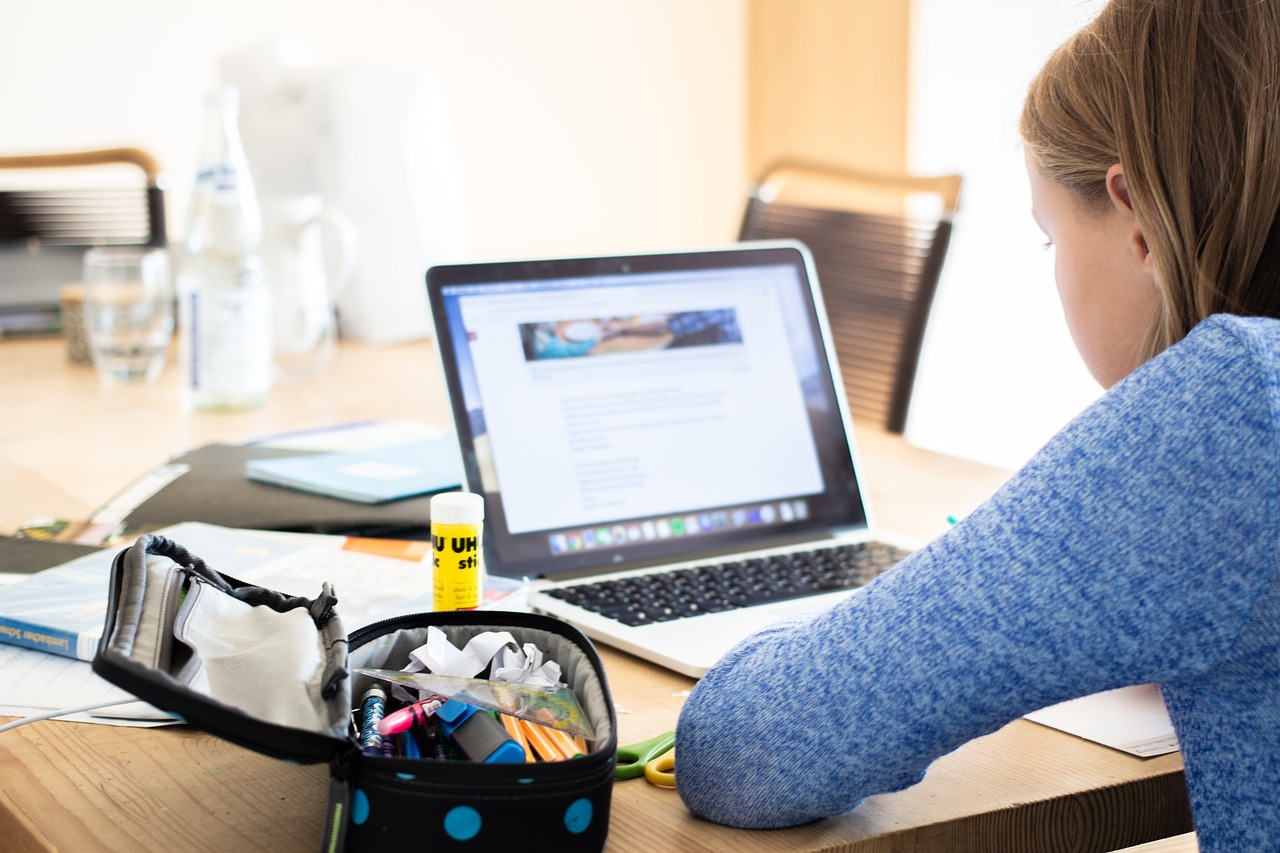
First impressions matter, particularly when it comes to your business. Whether you run a small independent shop, a busy office, a salon, a café or a professional service, the environment you create can influence how customers, clients and employees feel from the moment they walk through the door. A welcoming business does not necessarily need an expensive makeover. Often, it is the thoughtful details, friendly atmosphere and attention to comfort that make the biggest difference.
There has never been a better time to start your own blog or website. Whether you want to share your passion for travel, food, fashion, fitness, personal development or simply document your everyday experiences, having your own corner of the internet can be both rewarding and exciting. In 2026, creating a website is more accessible than ever, with plenty of beginner-friendly tools available to help you get started without needing to be a technical expert. The key is to focus on what you enjoy, who you want to reach and what you hope to achieve.
Ask most parents what they want from a school and the answer rarely starts with league tables. It starts with a feeling: that their child will be happy, safe and known. That feeling has a name in education, and it’s pastoral care. Getting it right is less about grand gestures and more about small, consistent habits that add up over time. Here is a practical guide for recognising strong pastoral care, whether you are choosing a setting or helping your own child feel more settled.
Step 1: Start with belonging, not achievement
Before a child can learn well, they need to feel they belong. Look for the everyday signals: are children greeted by name each morning? Do staff notice when someone is quieter than usual? Belonging is built in the ordinary moments, so pay attention to how adults speak to children when nothing dramatic is happening. A warm, unhurried welcome tells a child they are wanted, and that message settles the nervous system enough for learning to begin.
Step 2: Make sure every child is genuinely known
“Seen” is easy to say and harder to deliver. In practice it means an adult who understands what a particular child finds tricky, what makes them laugh, and how they behave when they are tired or worried. Ask how information travels between staff. Does the class teacher know what happened at drop-off? Is there a named person a child can go to? Smaller settings often manage this naturally, which is one reason a nurturing independent school in West London can keep close track of how each child is really doing.
Step 3: Build routines that create safety
Children relax into predictability. Clear routines around arrivals, transitions and the end of the day remove a surprising amount of low-level anxiety. You can support this at home too: a steady morning rhythm, a calm handover and a familiar after-school pattern all reinforce the sense that the world is reliable. Consistency between home and school is the quiet engine of good pastoral care.
Step 4: Teach children to name what they feel
Support grows stronger when children have the words for their emotions. Modelling this is simple. Instead of “don’t be silly, you’re fine”, try “you seem nervous about today, that makes sense”. Naming a feeling shrinks it. Over time children learn that emotions are manageable rather than frightening, and they become more willing to ask for help when they need it.
Step 5: Respond early, not just when things escalate
Good pastoral care is preventative. A brief check-in with a child who has gone quiet is worth far more than a crisis meeting weeks later. When you visit a school, ask how they spot the children who fly under the radar, the ones who never cause trouble but may still be struggling. Early, gentle attention is the difference between a wobble and a lasting worry.
Step 6: Keep the partnership two-way
Children thrive when the adults around them work together. That means honest, regular conversation between home and school, in both directions. Share what you notice at home, and expect the same openness in return. A setting that welcomes parents as partners, rather than treating them as an occasional audience, tends to be one where children feel supported on all sides.
Bringing it together
Settled, seen and supported is not a slogan. It’s a sequence: help a child feel they belong, make sure they are genuinely known, give them predictable routines, teach them to name their feelings, notice problems early, and keep parents part of the conversation. None of these steps is complicated. What makes them powerful is doing them consistently, day after day, until a child simply knows they are held. For families exploring what this looks like in practice, more can be found at https://www.lloydwilliamson.co.uk.
The first few weeks of a new term have a particular rhythm. Alarm clocks return, bags fill with textbooks, and diaries start to look crowded again. For children juggling lessons, sport, music practice and friendships, autumn can feel like the busiest season of the year. Helping them find balance now, before the pace builds towards winter assessments, sets the tone for everything that follows.
Balance is not about doing less. It is about doing the right things at the right time, with enough rest built in to make it sustainable. Here is how families can approach it as the term gets going.
Ask a group of parents which subjects matter most and you’ll hear a familiar list: reading, writing and a bit of maths. Science, technology, engineering and maths tend to sit further down, often treated as something children will pick up later, or something reserved for the naturally “clever” ones. That thinking causes a quiet problem. By the time STEM subjects feel important, many children have already decided they aren’t for them.
The problem: STEM feels optional until it’s too late
There’s a common assumption that STEM is a specialism rather than a foundation. Parents worry a young child isn’t ready for coding, or that engineering belongs to secondary school. So these subjects get squeezed into occasional projects rather than woven through the week.
A family posting to Dubai, Singapore or Geneva rarely worries about whether the maths curriculum will hold up. What keeps parents awake is smaller and harder to measure: will their child feel settled? Will someone notice when they don’t? Academic reputations are easy to compare on paper. The quality of care a child receives when they are lonely, homesick or simply finding their feet is far more difficult to see from a distance, and it matters just as much.
Pastoral care is the quiet architecture behind a happy child abroad. It covers everything that sits outside the timetable: the tutor who spots that a normally chatty pupil has gone quiet, the friendship groups that form in a new playground, the routines that give a week its shape when everything else has changed. For British children living overseas, that support carries extra weight. They are often adapting to a new language on the street, a new climate, and a social world that resets every few years as families come and go.
It’s easy to think that great style comes from owning expensive clothes or keeping up with every trend that shows up on social media, but the longer someone pays attention to fashion, the more obvious it becomes that the smallest details are usually the ones doing the hardest work. A simple outfit can suddenly look polished because of the right accessory, an interesting texture, or a thoughtful layer, while an outfit full of trendy pieces can still feel like it’s missing something.
Most conversations about school choice start loudly. League tables, facilities, the number of A grades pinned to the prospectus. The quieter question, and often the more useful one, is what daily learning actually feels like for a particular child. That is where the difference between single-sex and co-educational settings starts to matter, and it is worth looking at plainly rather than through received wisdom.
Two models, two rhythms
A co-educational school mirrors the wider world, and many families value that from the outset. Boys and girls learn side by side, and social confidence between the sexes builds early and naturally. It suits children who thrive on variety and a busy social mix.
Ask most parents when their child does the bulk of their learning, and they will point to the school day. It is an understandable answer, but it misses something researchers in early childhood development have understood for decades: a great deal of a child’s most durable learning happens in the ordinary, unremarkable moments at home.
These moments rarely announce themselves. They look like packing a bag, sorting the washing, or answering a question about why the moon is out during the day. Because they are so woven into daily life, they are easy to overlook. Yet they are precisely where curiosity, language and reasoning quietly take root.
The first weeks of a new school year always bring a familiar flurry: fresh exercise books, sharpened pencils and a renewed sense that this term will be the one where handwriting improves and spellings finally stick. It is a hopeful moment. It is also a good time to ask a question that autocorrect has quietly made awkward. If a phone can fix our mistakes for us, does careful spelling and grammar still count for anything?
The short answer is yes. The longer answer is worth the start of term.