

How to Support Your Child with Calm Homework
Homework has a reputation for causing evening standoffs. Yet a lot of what parents believe about the after-school slog turns out to be more myth than fact. Untangling the two can transform a fraught half hour into something far more settled, for the child and for everyone else in the house.
Myth: More hours mean better results
The idea that longer sessions produce stronger work is stubborn, but the evidence points the other way. A tired child rereading the same paragraph is not learning; they are simply enduring. Short, focused stretches with clear breaks tend to serve younger children far better than a marathon at the kitchen table.
Try setting a realistic window and sticking to it. When the time is up, it is up. Children work harder when they can see the finish line, and they arrive at the next task with something left in the tank.
Myth: A calm child is a quiet, still child
Calm is often confused with silence. In practice, some children settle best with a little movement, a snack beforehand, or the low hum of a familiar space rather than enforced hush. What matters is regulation, not stillness.
Watch for the signs your own child gives. One may need a few minutes of fresh air before sitting down; another may focus better after reading aloud a single line to shake off the wriggles. Calm homework is less about a perfect scene and more about a child who feels steady enough to begin.
Myth: Parents should be the second teacher
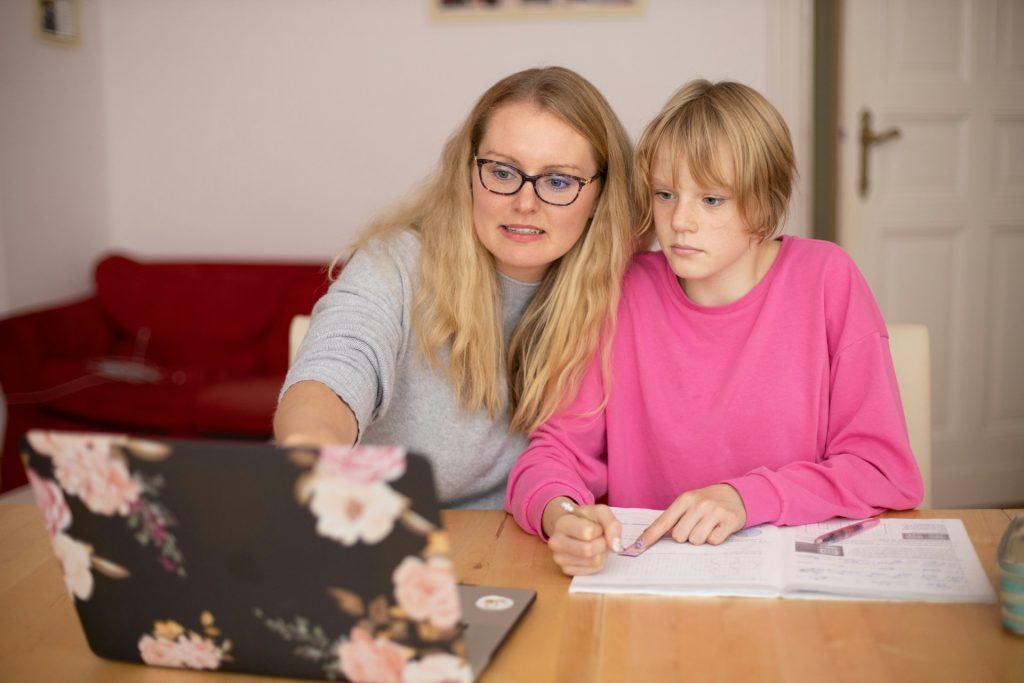
Plenty of parents assume their job is to explain, correct and quietly re-mark. This tends to raise the temperature rather than lower it. Children read frustration quickly, and a parent hovering over every sum can turn a manageable task into a test of the relationship.
A gentler role works better: set up the space, sit nearby, and let your child attempt the work first. Questions like “where do you think you’d start?” hand the thinking back to them. Good schools reinforce this at home, and schools that build strong habits around independent learning often send guidance home precisely so parents can step back with confidence.
Myth: Struggle means something is wrong
A furrowed brow is not a red flag. A certain amount of effort, even mild difficulty, is where the learning actually happens. If a child never finds anything hard, the work is probably pitched too low.
The trick is telling productive struggle apart from genuine distress. The first looks like concentration and the occasional sigh. The second looks like tears, avoidance or a child insisting they simply cannot. Only the second needs your intervention, and usually the answer is a break, not a rescue.
What calm homework actually looks like
Strip away the myths and a workable routine emerges. A consistent time and tidy spot. A short, clear window rather than an open-ended sentence. A parent who is present but not performing the task. And a shared understanding that some difficulty is normal and welcome.
None of this requires charts, rewards or elaborate systems. It rests on the same principle used across settings like Buckingham Preparatory School, where structure and independence are treated as partners rather than opposites. Children who learn to manage short bursts of focused work early tend to carry that steadiness into their later years.
Above all, keep the evening in proportion. Homework is one part of a child’s day, not the measure of it. A calm approach protects both the learning and the household, which matters far more than any single worksheet.
You can read more about that balance at https://buckprep.org.